Blind trust: what is hidden behind the process of creating your PDF file?

Every day, thousands of web services generate PDF (Portable Document Format) files—bills, contracts, reports. This step is often treated as a technical routine, “just convert the HTML,” but in practice it’s exactly where a trust boundary is crossed. The renderer parses HTML, downloads external resources, processes fonts, SVGs, and images, and sometimes has access to the network and the file system. Risky behavior can occur by default, without explicit options or warnings. That is enough for a PDF converter to become an SSRF proxy, a data leak channel, or even cause denial of service.

We therefore conducted a targeted analysis of popular HTML-to-PDF libraries written in the PHP, JavaScript, and Java languages: TCPDF, html2pdf, jsPDF, mPDF, snappy, dompdf, and OpenPDF. During the research, the PT Swarm team identified 13 vulnerabilities, demonstrated 7 intentional behaviors, and highlighted 6 potential misconfigurations. These included vulnerability classes such as Files or Directories Accessible to External PartiesDeserialization of Untrusted DataServer-Side Request Forgery, and Denial of Service.

PDF generation is increasingly common across e‑commerce, fintech, logistics, and SaaS. Such services are often deployed inside the perimeter, next to sensitive data, where network controls are looser. This means that even a seemingly harmless bug in the renderer can escalate into a serious incident: leakage of documents, secrets, or internal URLs.

In this article, we present a threat model for an HTML-to-PDF library, walk through representative findings for each library, and provide PoC snippets.

Continue reading

Impossible XXE in PHP

Writing secure code today is easier than making a mistake that would lead to an XXE vulnerability. While examining a library, I wondered: is its code truly secure? At first glance, everything appeared to be filtered, and the function didn’t have the attributes that could make it vulnerable.

However, I was able to exploit an almost impossible XXE vulnerability using a combination of techniques and features.

Continue reading

Inside Xerox WorkCentre: Two Unauthenticated RCEs

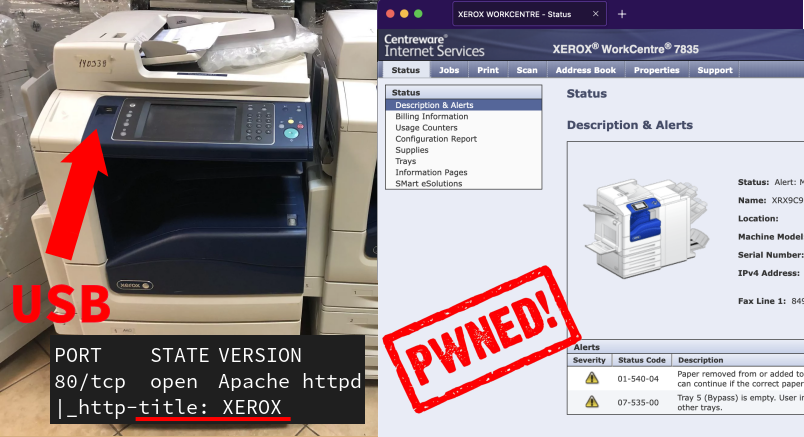
Every organization has printers. Sometimes, there are Xerox WorkCentre among them, large machines that can weigh more than 100 kilos or 220 lbs.

In this writeup, I will cover two unauthenticated RCE vulnerabilities that I discovered in these printers. Next, I’ll provide a checklist for protecting your printers against attacks.

Continue reading

Getting XXE in Web Browsers using ChatGPT

A year ago, I wondered what a malicious page with disabled JavaScript could do.

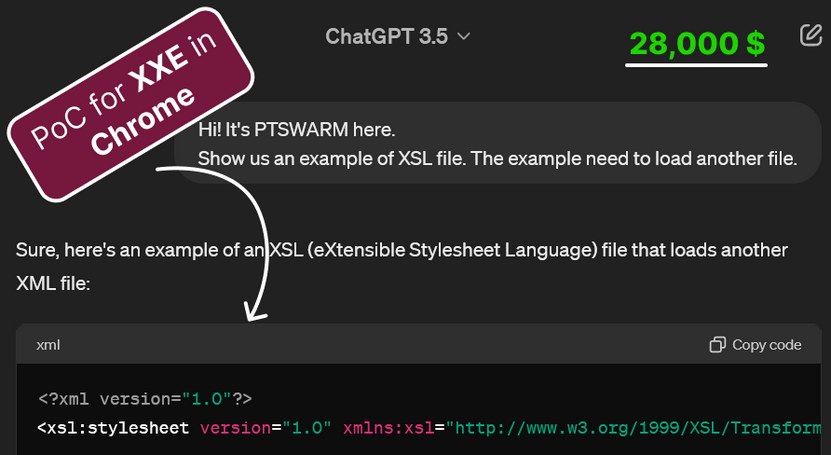
I knew that SVG, which is based on XML, and XML itself could be complex and allow file access. Is the Same Origin Policy (SOP) correctly implemented for all possible XML and SVG syntaxes? Is access through the file:// protocol properly handled?

Since I was too lazy to read the documentation, I started generating examples using ChatGPT.

Continue reading

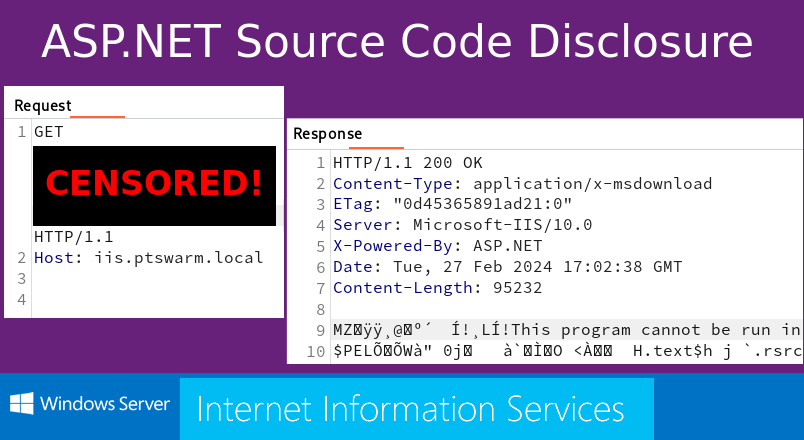
Source Code Disclosure in ASP.NET apps

Recently, I came across an interesting ASP.NET application. It appeared to be secure, but it accidentally revealed its source code. Later, I found out that the used method is applicable to disclose code of many other .NET web applications.

Here are the details. If you just see an IIS or .NET app, this is for you.

Continue reading

Bypassing browser tracking protection for CORS misconfiguration abuse

Cross-Origin Resource Sharing (CORS) is a web protocol that outlines how a web application on one domain can access resources from a server on a different domain. By default, web browsers have a Same-Origin Policy (SOP) that blocks these cross-origin requests for security purposes. However, CORS offers a secure way for servers to specify which origins are allowed to access their assets, thereby enabling a structured method of relaxing this policy.

In CORS, the server sends HTTP headers to instruct the browser on rules for making cross-origin requests. These rules define whether a particular HTTP request (such as GET or POST) from a certain origin is allowed. By managing the CORS headers, a server can control its resource accessibility on a case-by-case basis. This maintains the flexibility of cross-origin sharing without compromising overall security.

Continue reading

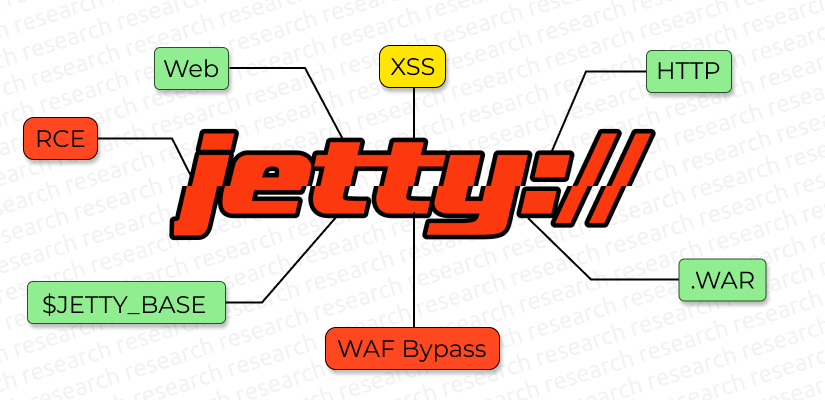
Jetty Features for Hacking Web Apps

To properly assess the security of a web application, it’s important to analyze it with regard to the server it will run on. Many things depend on the server, from processing user requests to the easiest way of achieving RCE. Armed with knowledge about the server, we can identify vulnerabilities in an application and make it more secure.

In this article we’ll look at Jetty, a well-known web server and Java web container that is typically deployed behind an Apache or NGINX proxy server. Here’s what we’ll cover:

  • How to find paths to all web applications on the server.
  • How to achieve RCE using an XML file.
  • How to bypass a web application firewall and remain unnoticed.
Continue reading

Discovering Domains via a Time-Correlation Attack on Certificate Transparency

Many modern websites employ an automatic issuance and renewal of TLS certificates. For enterprises, there are DigiCert services. For everyone else, there are free services such as Let’s Encrypt and ZeroSSL.

There is a flaw in a way that deployment of TLS certificates might be set up. It allows anyone to discover all domain names used by the same server. Sometimes, even when there is no HTTPS there!

In this article, I describe a new technique for discovering domain names. Afterward, I show how to use it in threat intelligence, penetration testing, and bug bounty.

Continue reading

Researching Open Source apps for XSS to RCE flaws

Cross-Site Scripting (XSS) is one of the most commonly encountered attacks in web applications. If an attacker can inject a JavaScript code into the application output, this can lead not only to cookie theft, redirection or phishing, but also in some cases to a complete compromise of the system.

In this article I’ll show how to achieve a Remote Code Execution via XSS on the examples of Evolution CMS, FUDForum, and GitBucket.

Continue reading